
Introduction
Having the right tools for home repairs is the difference between a quick DIY fix and a costly call to a professional. Whether you’re tightening a loose hinge, patching a wall, or fixing a leaky faucet, the right tools let you do it safely, quickly, and correctly. In this guide, you’ll discover which tools truly belong in every homeowner’s toolbox — and why they’re essential in 2025.
Why Basic Tools Matter
- Most homeowners end up spending significant time and money on maintenance: according to a 2023 survey, homeowners spend on average USD 6,087 annually on repairs and maintenance.
- The global DIY/home-improvement market is booming: in 2025, the global DIY home improvement market is valued at USD 805.8 billion and projected to reach USD 1,180 billion by 2035.
- Having basic tools helps you handle small problems before they become big — saving time, money, and stress.
In short: with the right tools, you can tackle most common home repairs confidently and efficiently.
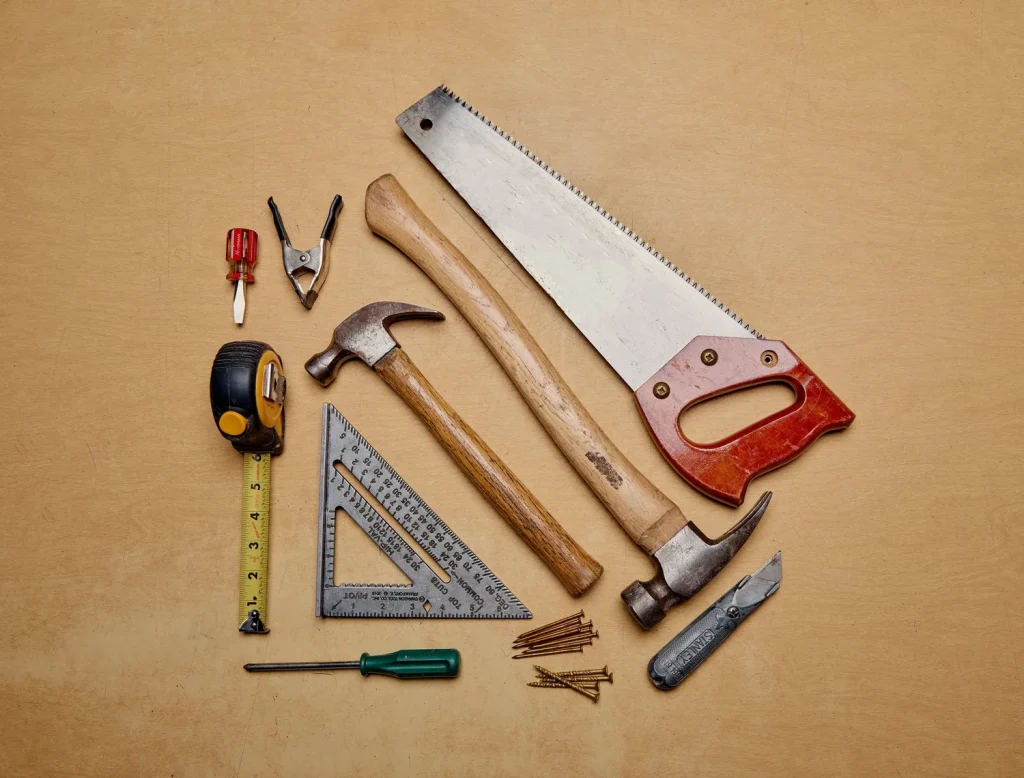
Essential Tools for Home Repairs (Must-Have)
Here’s a breakdown of the tools every homeowner should own in 2025, from everyday fixes to occasional jobs.
Hand Tools
- Claw hammer — for driving nails, removing nails, light demolition.
- Screwdriver set (flat-head and Phillips, various sizes) — for furniture assembly, electrical cover plates, door hinges, etc.
- Adjustable wrench — for plumbing, bolts, tightening furniture hardware.
- Pliers (slip-joint & needle-nose) — gripping, bending, cutting wires.
- Tape measure (25 ft / 7.5 m) — measuring spaces before cutting or buying materials.
- Utility knife — opening boxes, trimming drywall, cutting materials.
- Set of assorted nails, screws, anchors — for common mounting tasks.
Why these matter:
- These handle ~80% of small repairs and maintenance jobs.
- Affordable, compact, and easy to store.
- Useful for quick emergency fixes (e.g., loose cabinet, door hinge, bent pipe clamp).
Measuring & Layout Tools
- Tape measure (as above).
- Level (spirit / bubble level) — ensures shelves, frames, and installations are straight.
- Carpenter’s pencil + chalk line — helpful for marking, cutting straight lines on walls, wood, etc.
Example use case: Hanging shelves — measure distance, mark, use level to ensure alignment, then drill or nail accordingly.
Safety & Protection Gear
- Safety goggles / glasses — protect eyes from dust, splinters, debris.
- Work gloves — protect hands during demolition, cutting, plumbing, etc.
- Dust mask — when sanding, painting, or cleaning old surfaces.
- Ear protection (ear plugs or earmuffs) — if using power tools.
Why this matters: A simple mistake during DIY can lead to injury. Safety gear reduces risks significantly.
Specialty Tools (Occasional Use)
- Cordless drill + drill-bit set — for drilling holes in walls, installing fixtures, drilling into wood/metal/concrete depending on bits.
- Adjustable pipe wrench / pliers wrench — useful for plumbing tasks (leaky taps, pipe fittings).
- Putty knife / scraper + spackle / wood filler — for repairing wall holes, cracks, or dents.
- Stud finder (if available) — helps find backing behind walls when hanging heavy objects.
Use case: Fixing a leaky faucet — turn off water, use adjustable wrench or pipe wrench to tighten or replace fittings
How to Build Your Toolbox: Step-by-Step
- Start small — Buy basic hand tools (hammer, screwdrivers, pliers, wrench, tape measure).
- Organize — Use a toolbox or tool bag to keep everything in one place; designate a shelf.
- Add safety gear upfront — Even before power tools, gloves and goggles should be ready.
- Expand gradually — Over time, add a cordless drill, adjustable pipe wrench, putty knife, level.
- Maintain tools — Clean after use, oil moving parts, store away from moisture.
Why gradual build works: You only invest as needed, reducing upfront cost, and you learn how to use each tool before introducing more complex gear.
Pros & Cons of DIY Repair vs Hiring a Pro
Option | Pros | Cons |
DIY with your own tools | Save money; flexible scheduling; quick fixes; sense of achievement/skill growth | Risk of mistakes or injury; may not have right tools/skills; takes time |
Hiring a professional | Skilled workmanship; warranty on work; saves your time and effort | Higher cost; scheduling; less control over timing or materials |
Insight: For small and medium tasks — painting, hanging shelves, tightening fixtures, minor plumbing — DIY often makes sense. For complicated electrical, structural, or major plumbing tasks — hiring a pro is safer and smarter.
Common Mistakes to Avoid
- Buying cheap, flimsy tools — often false economy; quality tools last longer and are safer.
- Skipping safety gear — never risk injury just to “save time.”
- Using wrong tool for the job (e.g. using a screwdriver as a pry bar) — leads to damage or injury.
- Hoarding tools without organization — tools become hard to find when needed.
- Neglecting maintenance — rust, dull blades, or worn bits reduce effectiveness and safety.
Quick Summary Box
- Must-have tools: hammer, screwdrivers, adjustable wrench, pliers, tape measure, utility knife.
- Add measuring tools (level, chalk line), safety gear (glasses, gloves, mask), and expand gradually.
- A basic toolbox lets you handle ~80% of home repairs yourself.
- DIY saves money but carries some risk; complex jobs may require professionals.
- Avoid cheap tools, skip safety gear, and misuse tools — instead invest in quality, safety, and maintenance.
Conclusion
Having the right tools for home repairs transforms you from a passive homeowner into a confident DIYer. With a modest initial investment — hammer, screwdrivers, pliers, wrench, tape measure, utility knife, plus safety gear — you’ll be ready to tackle most everyday repairs efficiently and safely. Over time, expand wisely with a cordless drill, pipe wrench, and measuring tools to cover more tasks.
Action step: Make a list of basic tools you don’t yet own, assemble a simple toolbox, and tackle one small repair project this weekend — you’ll save money, build skill, and gain peace of mind.
